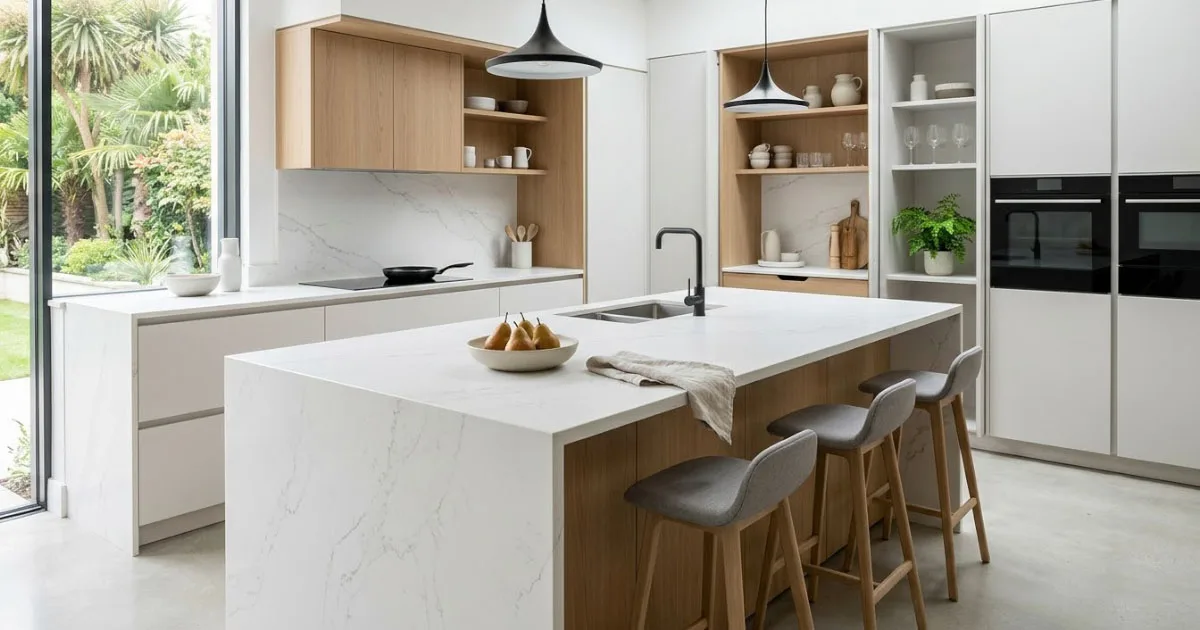
Choosing Kitchen Wall Tiles and Floor Tiles: What Makes a Kitchen Tile Different

Not every tile in a home is chosen for the same reasons. A tile picked for a bedroom floor, a bathroom wall, or an outdoor patio is usually selected to solve a different problem than a tile picked for a kitchen. Yet it is common for homeowners to treat "tiles" as one single category, and pick kitchen wall tiles or kitchen floor tiles the same way they would pick tiles for any other room, mainly by colour or price.
This is where problems tend to creep in. A kitchen is exposed to heat, oil, food spills, and frequent cleaning almost every day, conditions that most other rooms in the house rarely face together. Understanding what makes kitchen tiles their own category, rather than just another room to tile, makes it much easier to choose wall and floor tiles that hold up over time.
Why Kitchen Tiles Are Their Own Category
Every room in the home places different demands on its tiles. Looking at how a kitchen compares to other spaces makes it clearer why kitchen wall tiles and kitchen floor tiles need their own consideration:
- Bathrooms deal with constant moisture and humidity, but rarely with grease, oil, or high heat. Bathroom tiles are usually chosen with water resistance and mold control in mind.
- Outdoor and pool areas face rain, sun exposure, and temperature swings, so outdoor tiles are usually selected for weather resistance and strong slip grip underfoot.
- Bedrooms and living areas mainly deal with light foot traffic and are often chosen for appearance and comfort underfoot, with far less concern for staining or heavy cleaning.
- Kitchens combine several of these demands at once. A kitchen wall tile near the stove deals with heat and grease, while a kitchen floor tile deals with spills, dropped utensils, and frequent mopping, sometimes several times a day.
Seen this way, a kitchen is closer to a "high demand" zone than a purely decorative one. That is why a tile that performs well in a bedroom or living room will not necessarily perform the same way once it is installed in a kitchen.
What Can Go Wrong When the Wrong Tile Ends Up in the Kitchen
Using a tile that was really meant for another part of the home is one of the more common reasons homeowners end up unhappy with their kitchen surfaces later on. A few examples worth knowing:
- A decorative living room or bedroom tile may not be designed to resist grease and staining, so oil splatter near the stove can leave marks that do not wipe off as easily as expected.
- A tile borrowed from a bathroom design may prioritise water resistance over ease of cleaning around cooking residue, which is a different kind of daily wear.
- An outdoor-style tile used indoors on a kitchen floor can sometimes feel overly rough or textured underfoot for daily home use, even though it was chosen for its slip resistance outside.
- Light or very porous grout, common in some decorative applications, can discolour faster in a kitchen than it would in a lower-traffic room.
None of these issues are dramatic on their own, but they add up over months of everyday cooking and cleaning, and they are avoidable with the right tile from the start.
What to Look for in Kitchen Wall and Floor Tiles
Because a kitchen combines heat, grease, water, and daily foot traffic, it helps to check a few specific things rather than assuming any tile will do:
- For kitchen wall tiles, ask about how easily the finish wipes clean, especially around the stove and sink area where grease and splashes are most frequent.
- For kitchen floor tiles, ask about grip underfoot and how the tile performs when wet, particularly if your kitchen has a wet zone used for washing and heavier cooking.
- For both, check the grout tone and finish, since darker or well-sealed grout tends to be more forgiving in a kitchen than very light, untreated grout.
- Bring your cabinet and countertop samples when comparing tiles, since a colour that looks right on its own may read differently once placed next to the rest of your kitchen.
Trusted Brands, All Under One Roof
Part of choosing the right kitchen wall and floor tiles is having enough genuine options to compare, rather than settling for whatever a single supplier happens to have on hand. Mastile carries a curated portfolio of brands that can be considered for kitchen surfaces, including its own house brand Bellezza Ceramiche, alongside Niro Granite, White Horse Ceramic, Portino, BMS Porcelain, Alpha Tiles, GNG, MML and Kimgres for tiles, plus Weber, Ardex, Quicseal and Suzuka for the adhesives, grouts and waterproofing materials that go beneath and around them. Having this range under one roof makes it easier to compare tone, finish and price point for kitchen tiles, and to match the tile with the right installation materials, without visiting several separate suppliers.
Choosing With Confidence
The most reliable way to avoid these issues is to compare kitchen tiles specifically for kitchen use, rather than assuming a tile that suits another room will suit a kitchen as well.
At Mastile, our showroom brings together ceramic and porcelain tiles for kitchen floors, splashbacks, and feature walls from a curated range of brands, alongside our full collection for bathrooms, outdoor areas, and living spaces. This makes it easier to see, side by side, how a tile made for a kitchen differs from one made for another part of the home, and to choose accordingly. Our team can also walk through practical questions such as cleaning, grout choice, and how a tile is likely to perform in your specific kitchen layout.
If you are planning a kitchen renovation, contact us or visit our showroom in Johor Bahru or Nusajaya to explore kitchen wall and floor tiles suited to your space, compare them in person before deciding.